
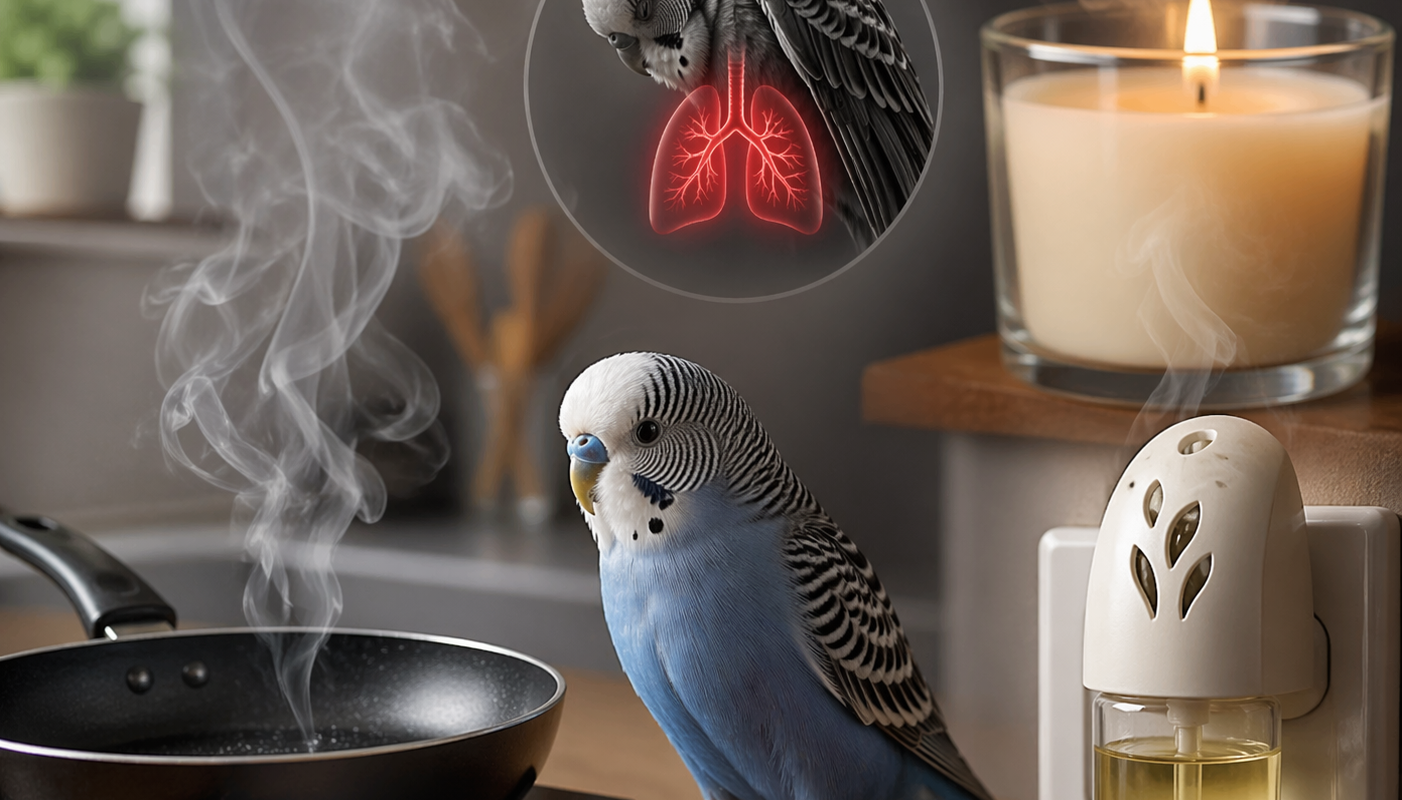
Birds are wonderful companions, but they are also far more sensitive than cats, dogs, and people when it comes to air quality. Their respiratory system is incredibly efficient, which means toxins in the air can affect them very quickly. Something that smells pleasant or seems harmless to you can be life threatening to a bird.
Many bird owners are unaware of the risks sitting in plain sight around the home.
Non Stick Pans and Cookware
Non stick pans, air fryers, baking trays, sandwich makers and many heated appliances may contain coatings such as PTFE, often linked with brands like Teflon.
When overheated, damaged, or sometimes even during normal high heat cooking, these coatings can release fumes invisible to the eye. For humans this may cause mild irritation. For birds it can be fatal within minutes.
This condition is often called toxicosis from overheated non stick coatings.
Risks include:
- Sudden breathing distress
- Open mouth breathing
- Weakness
- Collapse
- Sudden death
Even using a pan in another room may not be enough protection, as fumes travel quickly through the house.
Scented Candles
Many candles release smoke particles, soot, fragrance chemicals and volatile compounds into the air. Birds inhale these rapidly.
Problems can include:
- Irritated airways
- Sneezing
- Wheezing
- Eye irritation
- Stress from strong smells
- Long term respiratory damage
Cheap paraffin candles can be especially poor for indoor air quality.
Plug In Air Fresheners
Plug ins may smell clean and fresh to people, but they continuously release fragrance chemicals into the air.
For birds this constant exposure can be harmful, especially in smaller homes or poorly ventilated rooms.
Potential issues:
- Respiratory irritation
- Hormonal disruption from some chemicals
- Head shaking or distress
- Lethargy
- Reduced appetite
Why Birds Are So Sensitive
Bird lungs and air sacs are highly specialised. They move air through the body far more efficiently than mammal lungs. Brilliant for flight, terrible for household toxins.
In simple terms, birds get a stronger dose of airborne chemicals than you do.
Safer Choices
If you share your home with birds:
- Use stainless steel, cast iron, or ceramic cookware from trusted makers
- Never use overheated non stick products near birds
- Avoid scented candles entirely
- Avoid plug in air fresheners
- Open windows when safe to do so
- Keep kitchens separate from bird areas if possible
- Use unscented cleaning products
If Your Bird Is Exposed
If your bird suddenly shows breathing trouble, weakness, tail bobbing, or collapse after cooking or fragrance use, seek an avian vet immediately. Time matters.
Final Thought
Birds hide illness well. By the time they show signs, they may already be in trouble. A lovely smelling house is not worth risking a life.
For bird owners, fresh air beats fake vanilla every time.
