⚠️ Let’s Talk About Canker in Pigeons, Trichomonosis ⚠️
We see a lot of pigeons coming in with canker, also called Trichomonosis. It is a very common but very serious parasitic infection caused by a tiny single celled parasite that attacks the mouth, throat, crop and upper digestive tract. As the infection takes hold, it causes yellow or cream cheesy looking growths and plaques inside the mouth and throat. These are not just bits of food or pus. They are areas of dead, infected tissue and they can become extensive very quickly.
Although we most often see severe cases in pigeons and doves, smaller garden birds can be affected too, especially finches. In finches it can spread at feeders and bird baths, but the large obstructive lesions we see so often in pigeons are usually not seen to the same degree. That does not mean it is harmless in smaller birds. It can still make them very poorly and can still be fatal.
One of the biggest dangers with canker is that a bird can look only mildly unwell at first, while the inside of the throat is already badly affected. These growths can make it painful to swallow, difficult to breathe and almost impossible to eat or drink properly. Birds often become weak, fluffed up, hungry but unable to feed, and many slowly starve or dehydrate if they do not get help in time.
Now this next part really matters.
Sometimes people think the kindest thing is to pull the canker out. Please do not do that. 🙏
What you can see on the surface is often only part of the problem. Underneath, the lesion may be much larger and firmly attached to the delicate lining of the mouth, throat or crop. Pulling it away too early can tear that tissue open, cause severe bleeding and leave the bird choking, inhaling blood or suffering even more trauma. 💔
That is why we do not just yank these growths out.
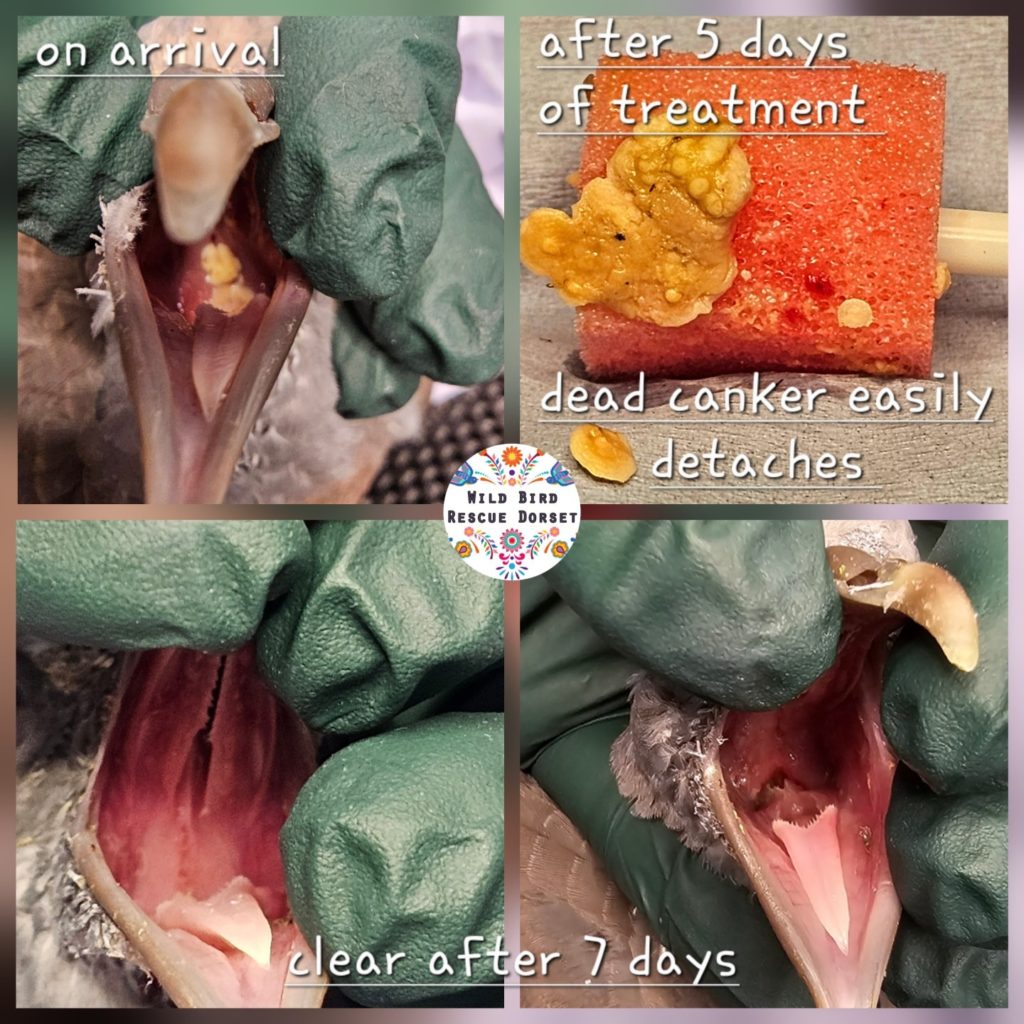
Treatment takes patience, proper veterinary medication, careful handling and close monitoring. As the parasite dies off, the dead tissue starts to loosen naturally. Only then can it sometimes be eased away safely and gently, often bit by bit. We commonly use medical sponge sticks to help release the dead material without ripping healthy tissue underneath. It is messy. It smells awful. It can take days. But that is the safe way.
It is also important for people to understand how canker spreads.
Canker spreads mainly through saliva, crop secretions and contaminated food or water. Adult pigeons can pass it to their babies when crop feeding them. Birds can also infect each other when drinking from the same dirty water source, eating from contaminated food, or through close beak to beak contact. Birds of prey can even pick it up by eating infected prey.
This is why filthy shared water bowls, dirty feeding areas and damp contaminated food can become such a problem.
The parasite does not cope well outside the bird in dry conditions. It needs moisture to survive, so once contaminated food or surfaces dry out properly, it dies off fairly quickly. Damp, dirty conditions help it spread. Dryness works against it.
That means hygiene really matters.
Fresh water every day. Clean bowls every day. No old wet seed left lying around. No build up of saliva and food around feeding spots. Let dishes dry properly before using them again where possible.
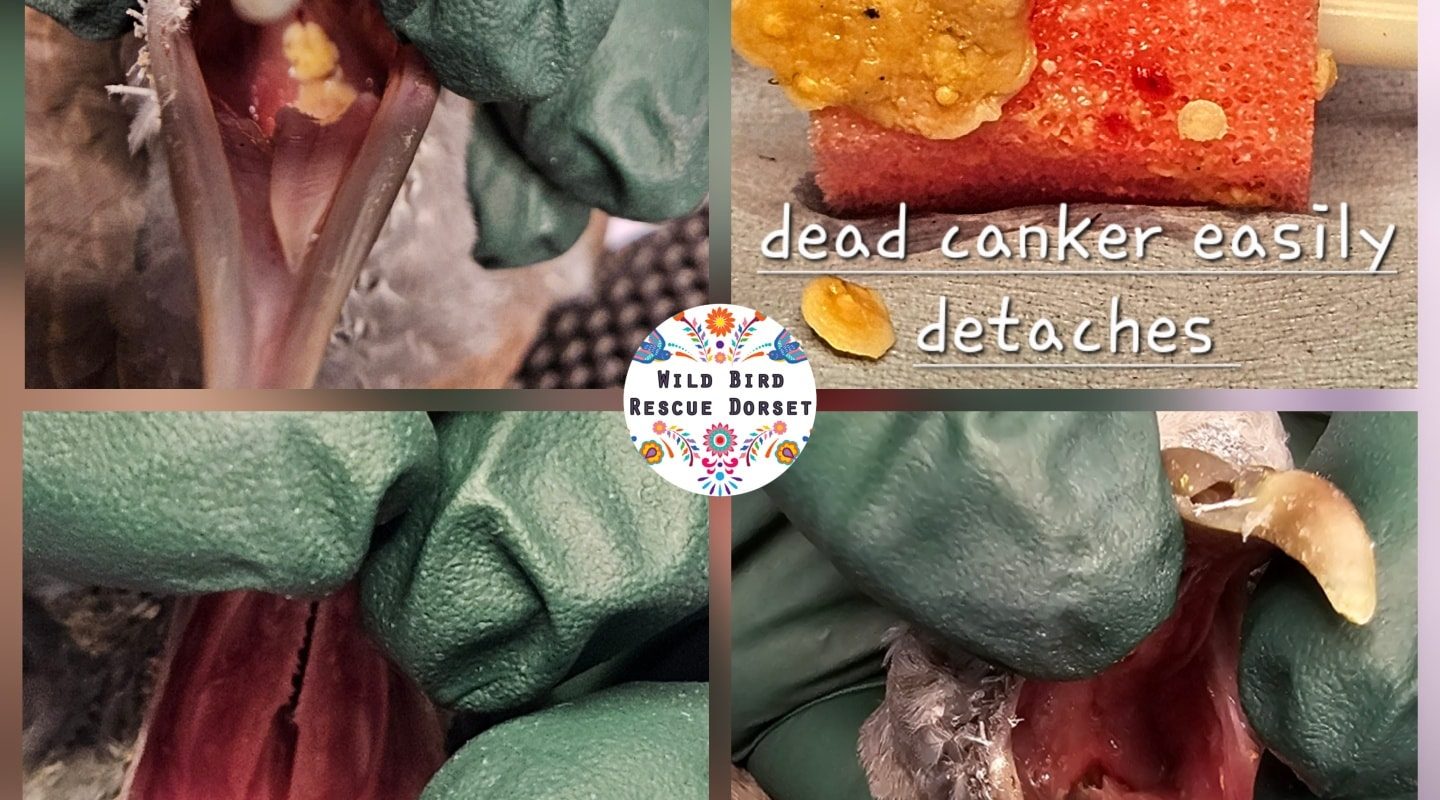
The photo here shows a successful removal after several days of treatment. Even then, that was not all of it, just the first part coming away. It is a slow process, but with experience, the right prescribed medication and a lot of care, recovery is possible.
So please, if you ever find a pigeon or any other bird with canker, do not try to scrape it out, pull it out or treat it yourself. Reach out to a rescue or a vet experienced with wildlife. The right treatment, at the right time, can make all the difference.
Every bird deserves that chance. 🕊️💛